Skip to content
Home / Door Types / Barn Doors

Barn Doors

Sliding doors that ride on an exposed track. Equal parts function and design statement.

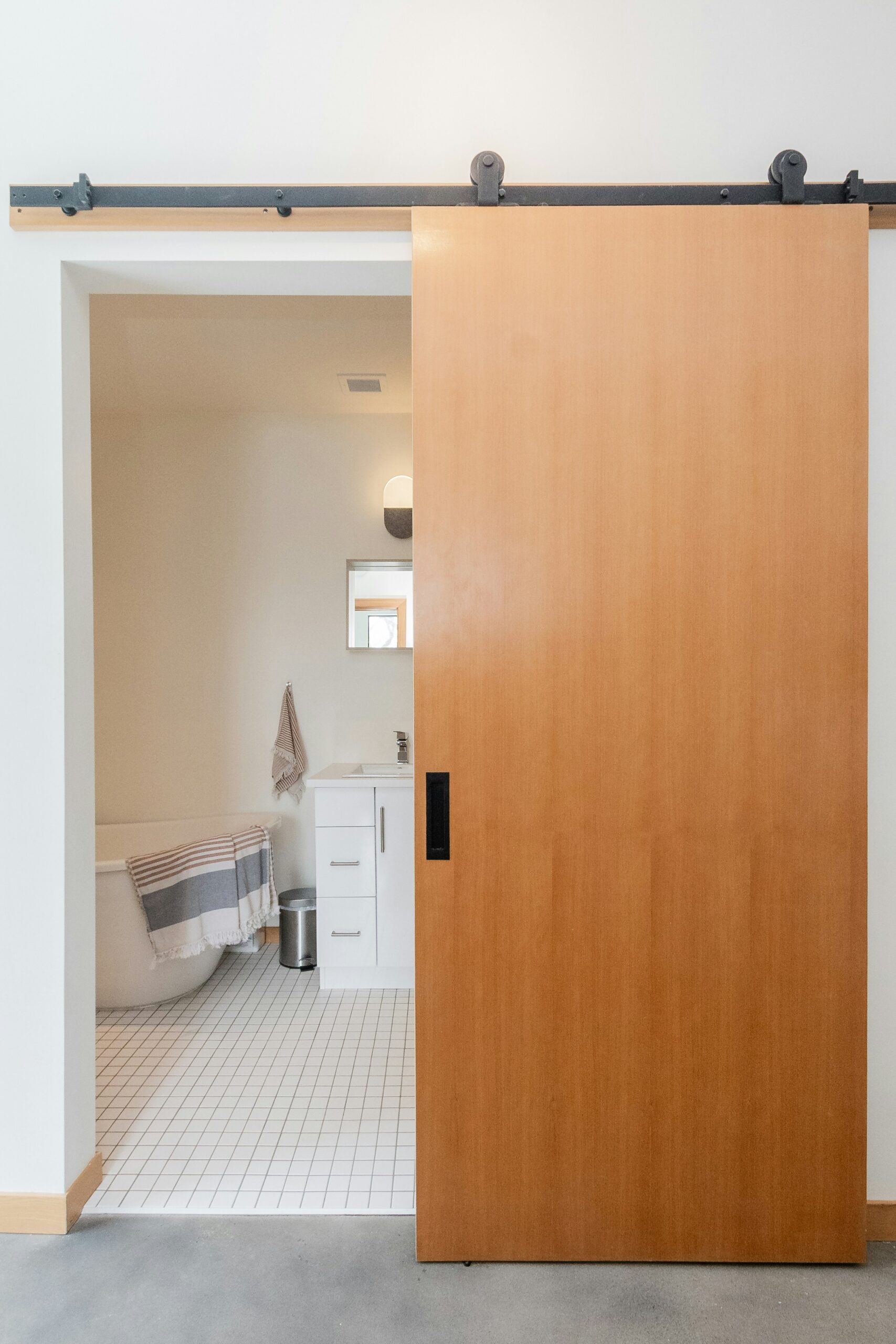
Interior Barn Door
OVERVIEW

When a barn door is the right call

Barn doors slide horizontally on a track mounted above the opening, instead of swinging on hinges. They were originally borrowed from agricultural buildings (hence the name), but they've become a deliberate design choice in modern and farmhouse-style homes. Done right, a barn door becomes a feature of the room, not just a way to close it off.

They're best suited to wider openings (3 feet and up), rooms where swing clearance is tight, and spaces where you want the door itself to add visual character. Pantries, primary bedrooms with ensuites, home offices, and laundry rooms are common uses. They're less suited to bathrooms or any room where sound and privacy matter — barn doors don't seal.

Barn doors are also more involved to install than they look. The wall above the opening needs solid blocking or reinforcement to support the track, the floor needs to clear, and the door itself is usually heavier than a standard interior door. This isn't a DIY-friendly install for most homeowners.

WHERE THEY SHINE

Where barn doors win

Primary Bedroom Ensuites

Sliding into the ensuite bathroom keeps the bedroom floor plan clean and frees up swing space for furniture. Pair with a privacy lock if sound isolation isn't critical.

Pantries & Mudrooms

A wide barn door makes a statement at the entry to a pantry or mudroom while staying out of the kitchen's traffic flow. Often becomes the visual anchor of the room.

Open-Concept Hallways

In homes where a hallway opens directly into a living space, a barn door provides optional separation without permanently dividing the floor plan.

Home Offices (with caveats)

Works if your office doesn't require quiet for calls or focused work. The exposed track and visible door slab can complement a modern or industrial office aesthetic.

TRADE-OFFS

Things to know before committing to a barn door

1

They Don't Seal — At All

Barn doors leave a visible gap on all four sides of the opening. Sound bleeds through. Smells bleed through. Light bleeds through. This is fine for a pantry or mudroom; it's a problem for a bathroom or bedroom where someone needs privacy or quiet. There are 'soft-close' and 'jamb-style' barn door kits that reduce the gap, but they don't eliminate it.

2

Wall Space and Reinforcement

The door needs somewhere to slide to. You need wall space beside the opening equal to the width of the door (so a 36-inch door needs 36 inches of clear wall to slide into). The wall above the opening must also have solid blocking to support the track — barn door hardware is heavy, and a track mounted only into drywall will fail. We add blocking during install if it's not already there.

3

Hardware Costs Add Up

The door itself can be reasonably priced, but the hardware kit (track, rollers, soft-close, anti-jump, jamb stops) is where costs climb. Good hardware is non-negotiable — cheap kits derail, sag, or rattle. Budget more for hardware than you would for a standard door's hinges and handle.

QUICK ANSWERS

Common questions about barn doors

Technically yes, and many homeowners do — but understand the trade-off. Barn doors don't seal, so you'll hear and smell what happens in the bathroom from the rest of the house. For ensuite bathrooms off a primary bedroom this is often acceptable. For a main bathroom serving the whole house, it usually isn't. We'll be honest with you during the quote about whether it fits your situation.

Equal to the width of the door slab. A 36-inch door needs 36 inches of clear wall to slide into. The clear wall area must also be free of light switches, outlets, art, or anything the door would slide over.

Yes, with ceiling-mounted barn door hardware. It's a more complex install and the hardware is more expensive, but it works well in rooms where there isn't enough clear wall beside the opening.

Honestly, no. The wall reinforcement, level track installation, and load-bearing requirements make this one of the door types where a small mistake produces a big, expensive problem — like a door that derails and damages flooring, or a sagging track that gets worse over time. Hire someone who installs them regularly.