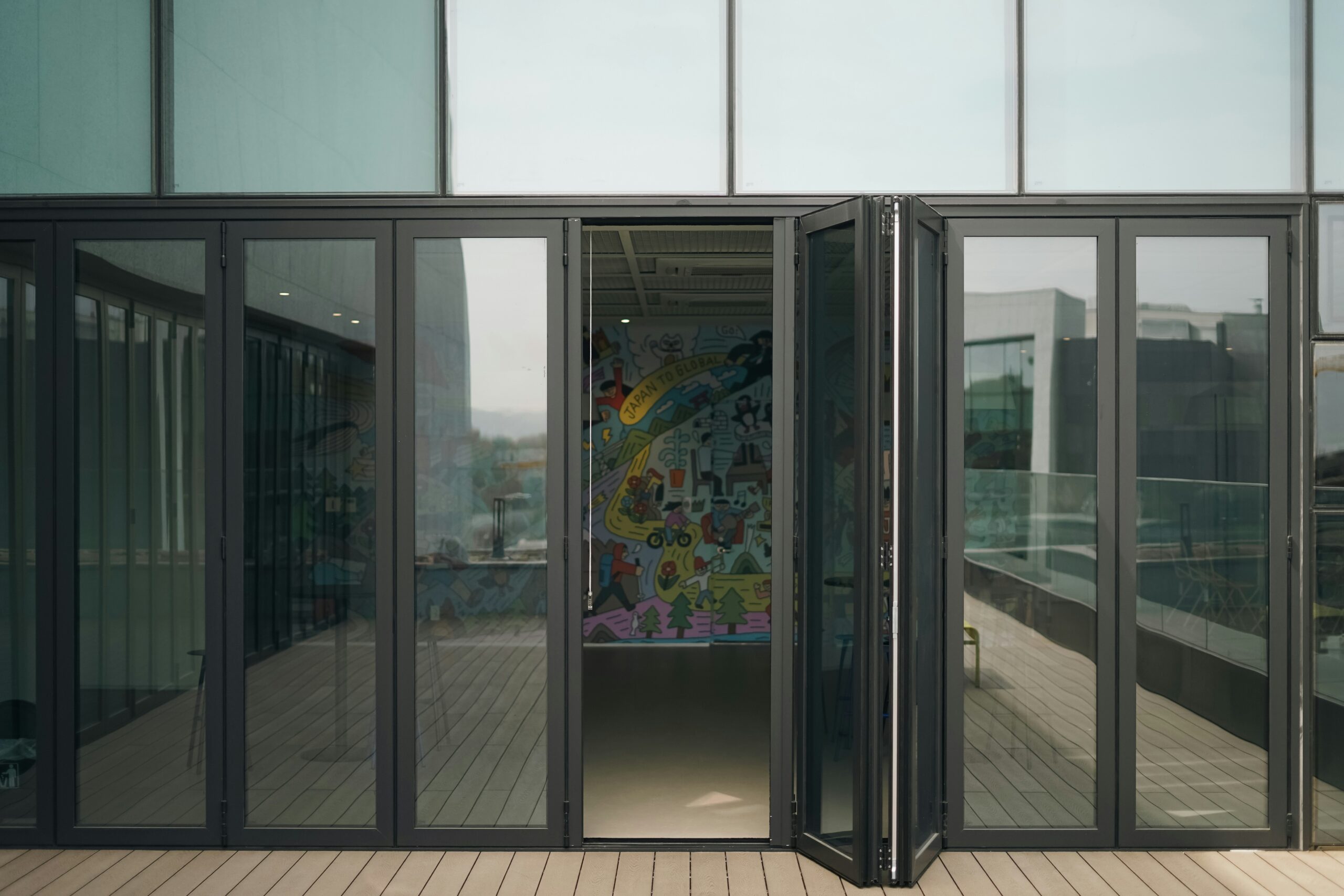
Space-saving folding doors built for closets, laundry rooms, and pantries where every inch counts.
Bifold doors solve a specific problem: you have an opening where a standard swing door would block traffic, take up valuable floor space, or hit a nearby wall or fixture. The bifold's two-panel folding design tucks neatly to one side, giving you nearly the full opening to walk through without the swing clearance.
They're most common in closets and small utility rooms because those spaces almost always have a competing constraint — a counter, a vanity, a doorway, a stacked washer/dryer — that makes a swing door awkward. In those exact situations, bifolds are the better choice almost every time.
The trade-off: bifolds rely on a metal track and pivot pins that need occasional adjustment. They don't seal as tightly as a standard door, so they're not ideal where sound isolation or privacy is critical. For their right use case, though, they're hard to beat for the price.
The most common use. Bifolds give you near-full access to the closet without eating up bedroom floor space. Standard swing doors block your dresser and reduce useful clearance.
Especially in smaller laundry rooms where a swing door would hit the washer, dryer, or the door from the hallway. Bifolds let you close off the room cleanly when not in use.
For tight pantries where a swing door would block kitchen traffic. Bifolds keep the kitchen flow open while still concealing the pantry contents.
Furnaces, water heaters, and electrical panels need access but rarely need a full swing door. Bifolds give you full access when needed and stay out of the way when you don't.
Bifold doors hang from a metal track at the top. Over time, dust accumulates and the rollers wear, which makes the doors stick or jump out of alignment. This is normal — the track needs occasional cleaning and the rollers may need adjustment every few years. It's not a defect, it's the nature of how they work.
Bifolds have small gaps around the panels and at the centre seam. This makes them poor at blocking sound, light, or smells. For a bedroom or bathroom this is a problem; for a closet it doesn't matter.
Cheap bifold hardware (the track, pivots, and rollers) fails fast. The doors themselves can be reasonable quality, but if the hardware is bargain-bin, you'll be adjusting them constantly. We always recommend upgrading the hardware kit even if it adds $30-50 per opening — it pays back in years of smooth operation.
Bifold doors hang from a metal track at the top. Over time, dust accumulates and the rollers wear, which makes the doors stick or jump out of alignment. This is normal — the track needs occasional cleaning and the rollers may need adjustment every few years. It's not a defect, it's the nature of how they work.
Bifolds have small gaps around the panels and at the centre seam. This makes them poor at blocking sound, light, or smells. For a bedroom or bathroom this is a problem; for a closet it doesn't matter.
Cheap bifold hardware (the track, pivots, and rollers) fails fast. The doors themselves can be reasonable quality, but if the hardware is bargain-bin, you'll be adjusting them constantly. We always recommend upgrading the hardware kit even if it adds $30-50 per opening — it pays back in years of smooth operation.
We install bifold doors with upgraded hardware so they stay smooth for years, not months. Get a free quote with all materials and labour.